Islam is built upon five essential pillars that shape a Muslim’s faith, worship, and daily life. Known as the Five Pillars of Islam, these fundamental acts of worship help Muslims strengthen their relationship with Allah and live according to His guidance.
For new Muslims, learning these pillars is one of the best places to begin understanding Islam. They include the declaration of faith, daily prayer, charity, fasting during Ramadan, and pilgrimage to Makkah.
In this beginner-friendly guide, we will explain each of the Five Pillars of Islam, what it means, and why it is important.
What Are the Five Pillars of Islam?
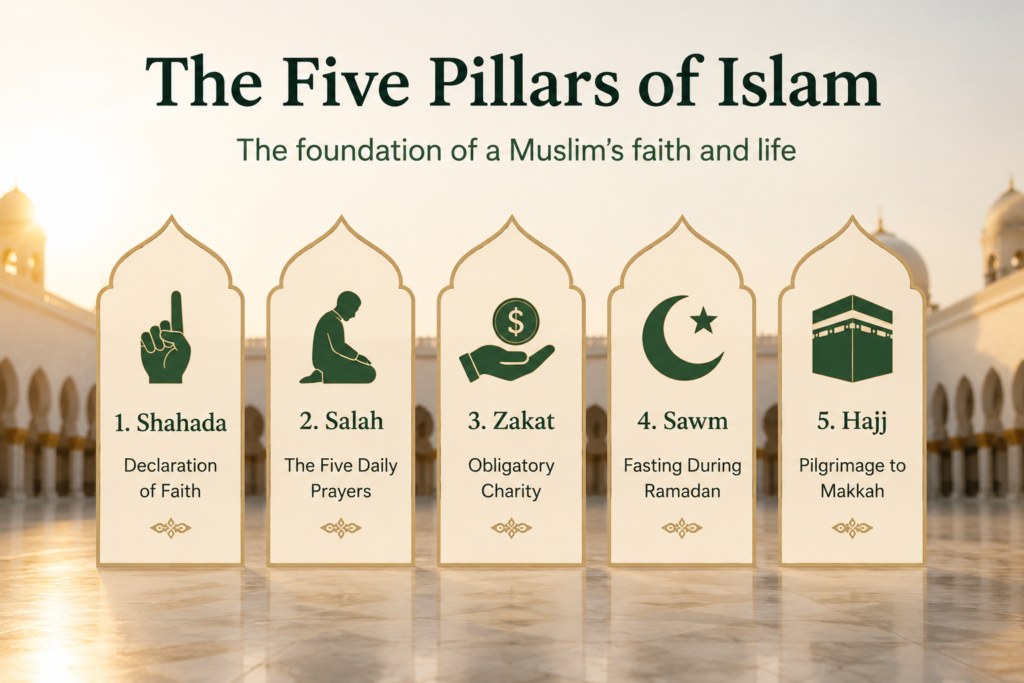
The Five Pillars are the foundation of Islamic practice:
- Shahada — Declaration of Faith
- Salah — The Five Daily Prayers
- Zakat — Obligatory Charity
- Sawm — Fasting During Ramadan
- Hajj — Pilgrimage to Makkah
The Prophet Muhammad ﷺ described these five acts as the foundations upon which Islam is built.
Each pillar has its own purpose, but together they help Muslims worship Allah, develop discipline, care for others, and strengthen their faith.
Shahada: The Declaration of Faith
The Shahada is the testimony of faith and the first pillar of Islam.
It is:
Ashhadu an la ilaha illa Allah, wa ashhadu anna Muhammadan rasul Allah.
Meaning:
“I bear witness that there is no deity worthy of worship except Allah, and I bear witness that Muhammad is the Messenger of Allah.”
The Shahada expresses the central belief of Islam: worship belongs to Allah alone, and Prophet Muhammad ﷺ is His Messenger.
For someone embracing Islam, sincerely believing and declaring the Shahada marks the beginning of their life as a Muslim.
Salah: The Five Daily Prayers
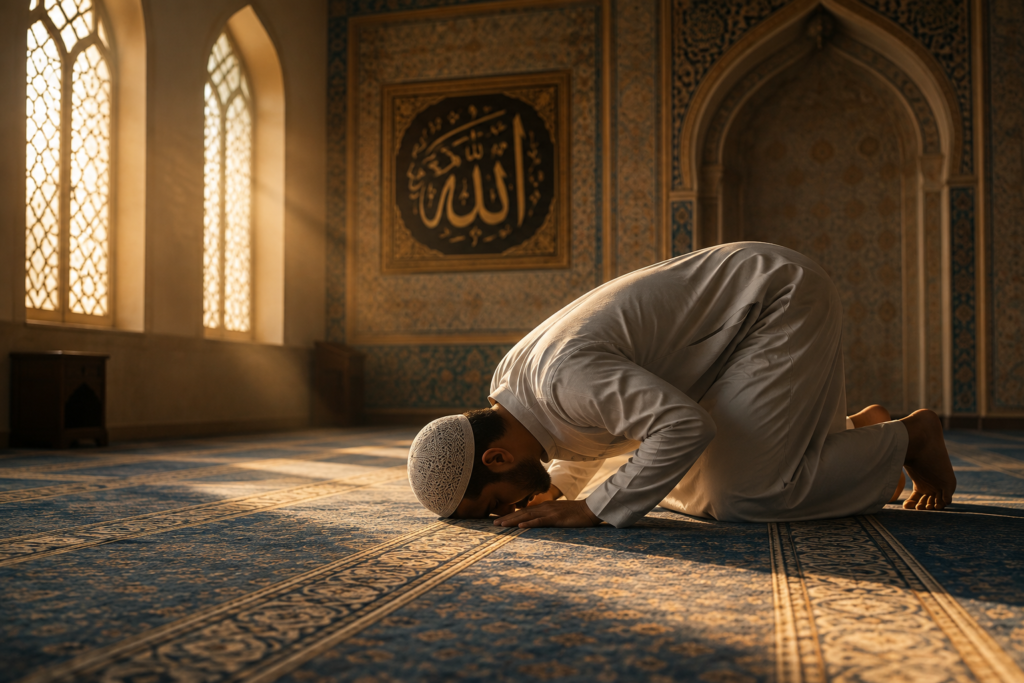
Salah is the second pillar of Islam.
Muslims perform five obligatory prayers every day:
- Fajr — before sunrise
- Dhuhr — around midday
- Asr — in the afternoon
- Maghrib — just after sunset
- Isha — at night
Prayer gives Muslims regular moments throughout the day to remember Allah, worship Him, seek His guidance, and express gratitude.
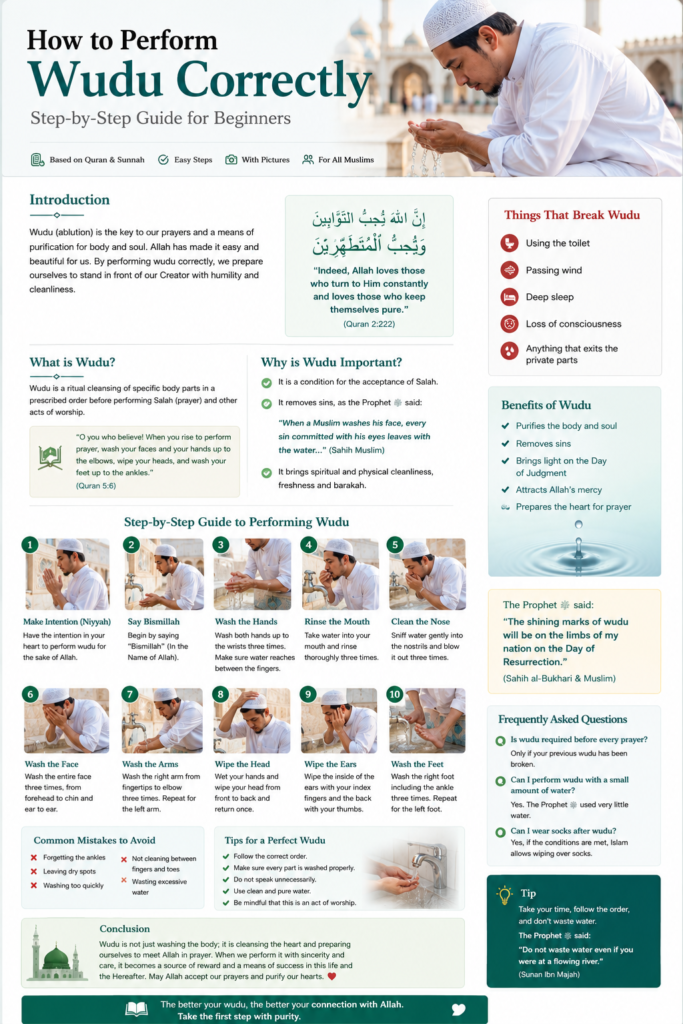
Before Salah, a Muslim normally performs Wudu, the ritual purification with water.
If you are still learning prayer, take it gradually. Learning the movements, words, and meanings takes time.
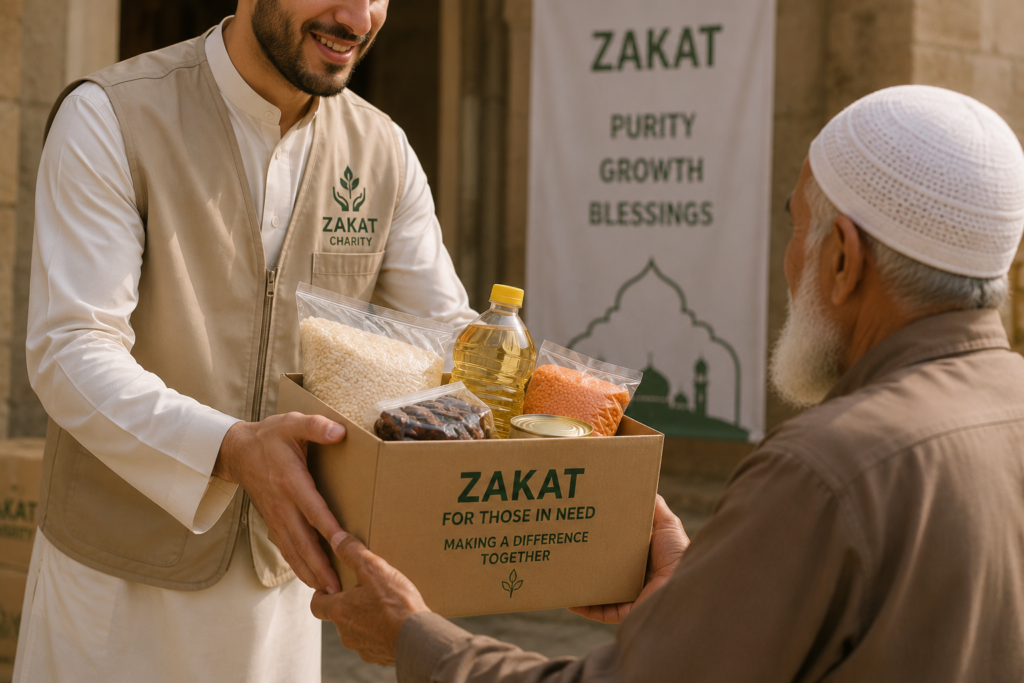
Zakat: Giving to Those in Need
Zakat is the third pillar of Islam and a form of obligatory charity.
For Muslims who meet the required financial conditions, Zakat involves giving a portion of qualifying wealth to eligible recipients.
Zakat teaches Muslims that wealth is a blessing and responsibility. It encourages generosity, helps people in need, and strengthens solidarity within the community.
Zakat should not be confused with Sadaqah, which is voluntary charity and can be given at any time.
For beginners, it is important to understand that the detailed rules of Zakat depend on the type and amount of wealth a person owns. When calculating an actual Zakat obligation, reliable scholarly guidance should be consulted.
Sawm: Fasting During Ramadan
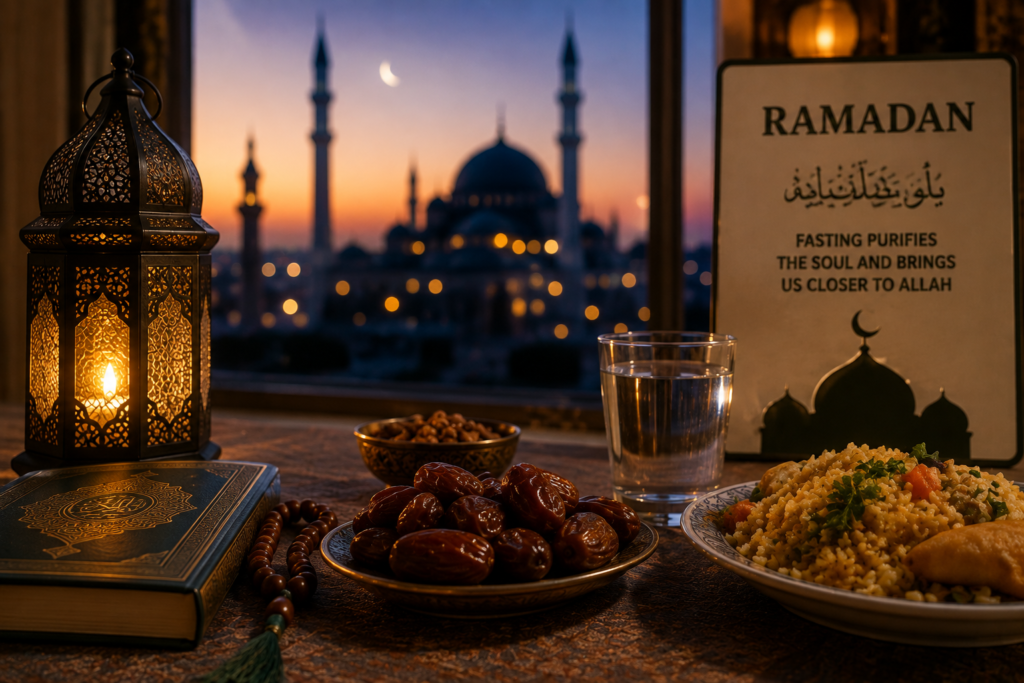
Sawm means fasting, and fasting during the month of Ramadan is the fourth pillar of Islam.
During Ramadan, Muslims who are required and able to fast abstain from food, drink, and other things that invalidate the fast from dawn until sunset.
But Ramadan is about much more than avoiding food and drink.
Muslims also try to increase their prayers, read the Quran, make dua, give charity, control harmful behavior, and grow closer to Allah.
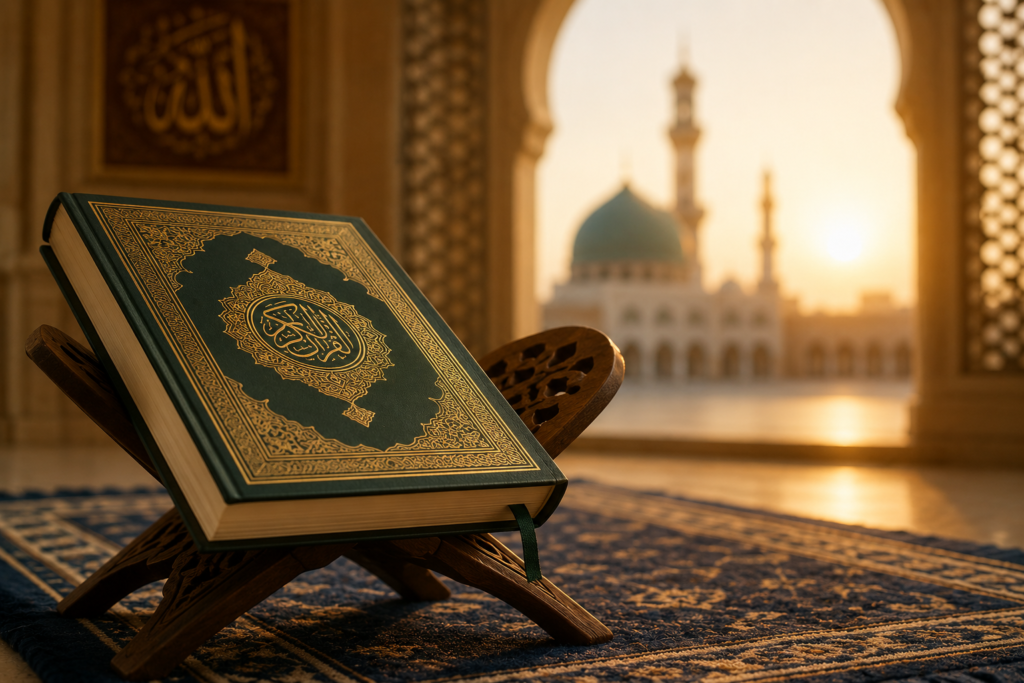
Allah says in the Quran that fasting was prescribed for believers so that they may develop taqwa, or consciousness of Allah.
Quran: Surah Al-Baqarah 2:183
There are exemptions from fasting in particular circumstances, so someone who is unable to fast should learn the rulings applicable to their situation from a qualified source.
Hajj: The Pilgrimage to Makkah
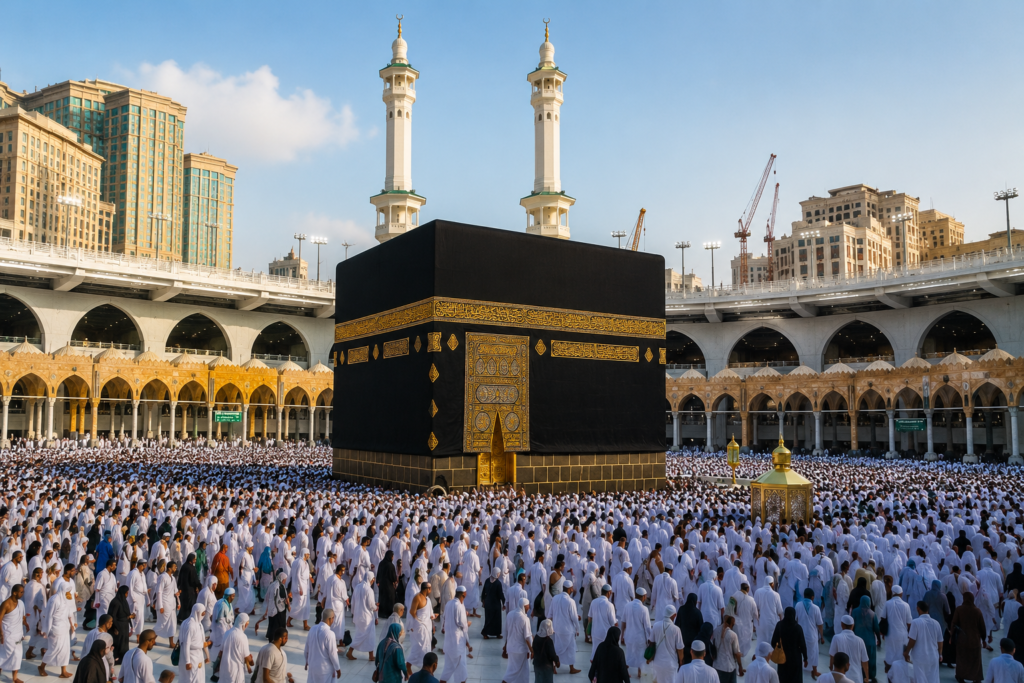
Hajj is the fifth pillar of Islam.
It is the pilgrimage to Makkah that Muslims who are physically and financially able are required to perform once in their lifetime.
Hajj takes place during the Islamic month of Dhul Hijjah and includes a series of acts of worship performed at sacred locations in and around Makkah.
Muslims from different countries, cultures, and backgrounds gather to worship Allah, creating a powerful expression of unity and equality.
The pilgrimage also connects Muslims with the legacy of Prophet Ibrahim (Abraham), his family, and the history of the Kaaba.
Why Are the Five Pillars of Islam Important?
The Five Pillars are not simply a checklist. Together, they influence different parts of a Muslim’s life.
Shahada establishes faith.
Salah creates a daily connection with Allah.
Zakat develops generosity and responsibility toward others.
Sawm teaches discipline and consciousness of Allah.
Hajj represents worship, sacrifice, and the unity of Muslims.
For a new Muslim, there is a lot to learn. The goal should be to build knowledge steadily and establish a strong foundation rather than trying to master everything immediately.
Frequently Asked Questions
What are the Five Pillars of Islam in order?
They are Shahada, Salah, Zakat, Sawm, and Hajj.
Which is the first pillar of Islam?
The first pillar is the Shahada, the declaration and testimony of faith.
How many times do Muslims pray each day?
Muslims have five obligatory daily prayers: Fajr, Dhuhr, Asr, Maghrib, and Isha.
Does every Muslim have to perform Hajj?
Hajj is obligatory once in a lifetime for Muslims who meet the relevant conditions, including being physically and financially able to undertake the pilgrimage.
Is Zakat the same as ordinary charity?
No. Zakat is an obligatory form of giving with specific rules and conditions. Sadaqah is voluntary charity.
Final Thoughts
The Five Pillars of Islam provide Muslims with a foundation for worship and daily life.
From declaring faith in Allah to praying, helping those in need, fasting during Ramadan, and making the pilgrimage to Makkah, each pillar teaches important lessons about faith, discipline, gratitude, generosity, and devotion.
If you are new to Islam, learn gradually and focus on building a sincere and consistent relationship with Allah.
May Allah increase us in beneficial knowledge, strengthen our faith, and guide us to worship Him sincerely. Ameen.