The Quran is at the heart of Islam. For Muslims, it is more than a book to read—it is the word of Allah, a source of guidance, wisdom, comfort, and a way to grow closer to Him.
If you are a new Muslim or are simply beginning to learn about Islam, opening the Quran for the first time can feel overwhelming. Where should you start? Do you need to know Arabic? Which Surahs should you read first?
This beginner-friendly guide will help you understand what the Quran is, how it was revealed, how it is organized, and how you can begin reading and understanding it step by step.
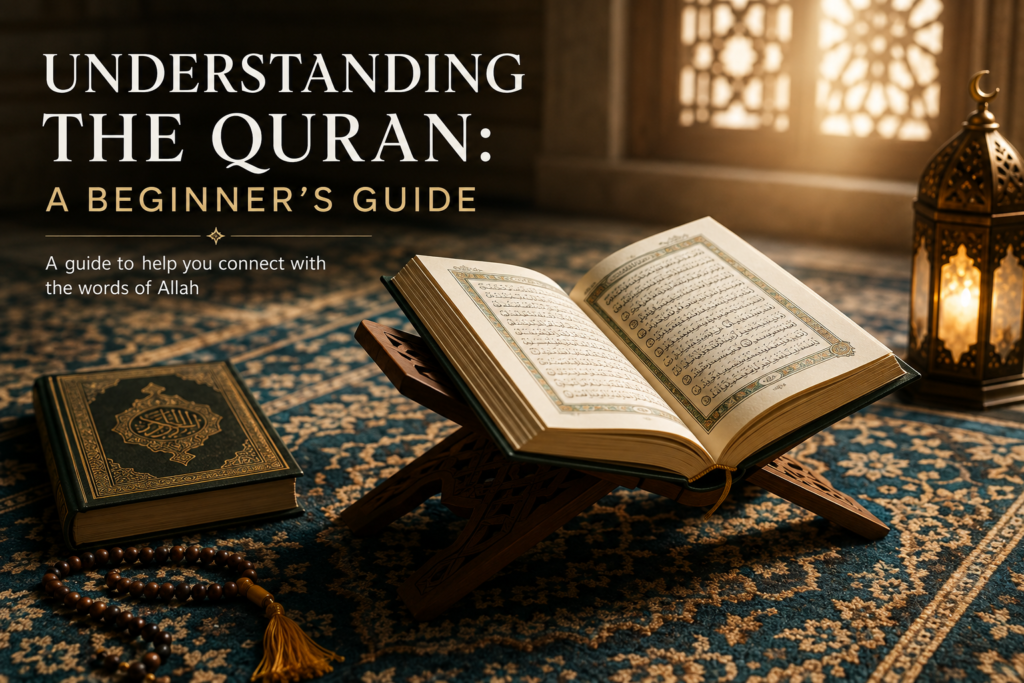
What Is the Quran?
The Quran is the holy book of Islam. Muslims believe that it is the word of Allah revealed to Prophet Muhammad ﷺ through the Angel Jibril (Gabriel).
The revelation took place gradually over approximately 23 years.
Unlike a book written by a human author, Muslims believe that the Quran is divine revelation and guidance from Allah for humanity.
Allah says:
“This is the Book about which there is no doubt, a guidance for those conscious of Allah.”
Quran 2:2
The Quran teaches Muslims about faith, worship, morality, family, justice, patience, mercy, and our relationship with Allah.
How Was the Quran Revealed?
The revelation of the Quran began when Prophet Muhammad ﷺ was in the Cave of Hira near Makkah.
The Angel Jibril came to him with the first revelation.
The first revealed words included:
“Read in the name of your Lord who created.”
Quran 96:1
The Quran was not revealed all at once. Verses and Surahs were revealed at different moments throughout the Prophet’s mission.
This gradual revelation helped guide the early Muslim community through different situations and challenges.
How Is the Quran Organized?
Understanding the basic structure of the Quran makes reading it much easier.
The Quran contains 114 Surahs, or chapters.
Each Surah contains individual verses called Ayat.
Some Surahs are very short, while others contain many verses. The Quran is also divided into 30 sections called Juz, which can make it easier to organize regular reading.
The first Surah is Al-Fatihah (The Opening), an essential chapter that Muslims recite during their daily Salah.
The longest Surah is Al-Baqarah, while some of the shortest Surahs appear toward the end of the Quran.
Why Do Muslims Read the Quran?
Muslims read the Quran first and foremost to seek guidance from Allah.
But Quran reading is not only about obtaining information. It is also an act of worship.
Regularly reading and reflecting on the Quran can help a Muslim strengthen faith, remember Allah, learn how to live according to Islam, find comfort during difficult moments, and better understand the purpose of life.
The goal should not simply be to finish pages quickly.
Even reading a small amount while trying to understand and apply it can be extremely valuable.
How to Start Reading the Quran as a Beginner
You do not need to read the entire Quran immediately.
Start small.
Begin With Short Surahs
Short Surahs are easier to read, memorize, and understand.
Many beginners start with Surahs from the final part of the Quran.
Use a Translation
If you do not understand Arabic, use a reliable translation in a language you understand.
Reading the meaning helps you understand what Allah is teaching through the verses.
Remember, however, that a translation represents an interpretation of the meaning of the Arabic Quran rather than replacing the original Arabic text.
Read a Little Every Day
Consistency is more useful than trying to read a huge amount once and then stopping.
You could begin with just 5–10 minutes per day.
For example, read a few verses, read their translation, and spend a moment thinking about what you learned.
Listen to Quran Recitation
Listening to skilled Quran reciters can help you become familiar with Arabic pronunciation and the rhythm of Quranic recitation.
You can listen while following the Arabic text and translation.
Take Your Time
There is no reason to rush.
Understanding one passage well can be more beneficial than quickly reading many pages without understanding them.
Which Surahs Should a Beginner Learn First?
A very important place to begin is Surah Al-Fatihah.
Al-Fatihah is recited in every unit of the Muslim prayer, so learning it is particularly important for someone learning Salah.
After Al-Fatihah, beginners often learn short Surahs such as:
- Al-Ikhlas
- Al-Falaq
- An-Nas
- Al-Kawthar
Learn them gradually rather than trying to memorize everything at once.
Pronunciation may not be perfect when you begin. Keep learning and improving step by step.
How to Understand the Quran Properly
Sometimes simply reading a translation does not provide all the context needed to understand a verse.
This is where Tafsir becomes useful.
Tafsir is the explanation and interpretation of Quranic verses based on Islamic scholarship.
A good Tafsir can explain the historical context of a revelation, the meaning of important Arabic words, how verses relate to one another, and lessons scholars have derived from them.
Beginners should use trustworthy Islamic resources and qualified scholarship rather than relying on isolated quotations or random interpretations online.
When something seems confusing, it is perfectly reasonable to research it further or ask someone knowledgeable.
Good Manners When Reading the Quran
Muslims approach the Quran with respect because they believe it contains the words of Allah.
Good practices include choosing a clean and respectful place, handling a physical Mushaf respectfully, listening attentively when the Quran is being recited, and approaching the Quran sincerely with the intention of learning and seeking guidance.
There are also jurisprudential details concerning purification and handling a physical Arabic Mushaf. If you are unsure about a specific ruling, consult a knowledgeable scholar or trusted Islamic authority.
The most important thing for a beginner is not to allow uncertainty about every detail to prevent you from learning.
Do I Need to Know Arabic to Read the Quran?
No. You can begin learning about the Quran even if you do not speak Arabic.
A translation can help you understand its meanings while you gradually learn Arabic pronunciation.
At the same time, Muslims around the world learn portions of the Quran in Arabic because the original revelation is in Arabic and Quranic verses are recited in Salah.
You do not need to become fluent in Arabic before beginning your Quran journey.
Start with what you can do today.
How Much Quran Should I Read Every Day?
There is no single amount suitable for every beginner.
Choose an amount you can maintain consistently.
For one person, that might be one page. For another, it might be five verses with translation and reflection.
A simple beginner routine could be:
Read → Understand → Reflect → Apply
As your confidence grows, you can gradually increase the amount you read.
There is no single amount suitable for every beginner.
Choose an amount you can maintain consistently.
For one person, that might be one page. For another, it might be five verses with translation and reflection.
A simple beginner routine could be:
Read → Understand → Reflect → Apply
As your confidence grows, you can gradually increase the amount you read.
Can I read a Quran translation if I am not Muslim?
Yes. Anyone interested in understanding Islam can read a translation of the Quran.
Can a new Muslim read the Quran in English?
Yes. Reading a reliable English translation is an excellent way to begin understanding the Quran while gradually learning Arabic.
Should I read the Quran from beginning to end?
You can, but it is not required for a beginner. Starting with Al-Fatihah and shorter Surahs can make learning more manageable.
What if I do not understand a verse?
Do not immediately assume a meaning from the English wording alone. Look at a reputable Tafsir and the context of the passage, or ask a qualified person if necessary.
What if my Arabic pronunciation is not good?
Keep practicing. Learning Quranic Arabic and pronunciation takes time. Listen carefully to correct recitation and improve gradually rather than expecting perfection immediately.
Final Thoughts
Understanding the Quran is a lifelong journey.
You do not have to understand everything immediately, memorize dozens of Surahs, or speak fluent Arabic before you begin.
Start with Al-Fatihah. Read a few verses. Understand their meaning. Ask questions. Learn consistently.
Over time, the Quran can become part of your daily life rather than something that feels difficult or distant.
May Allah increase us in beneficial knowledge, help us understand His Book, and allow us to live according to its guidance. Ameen.